
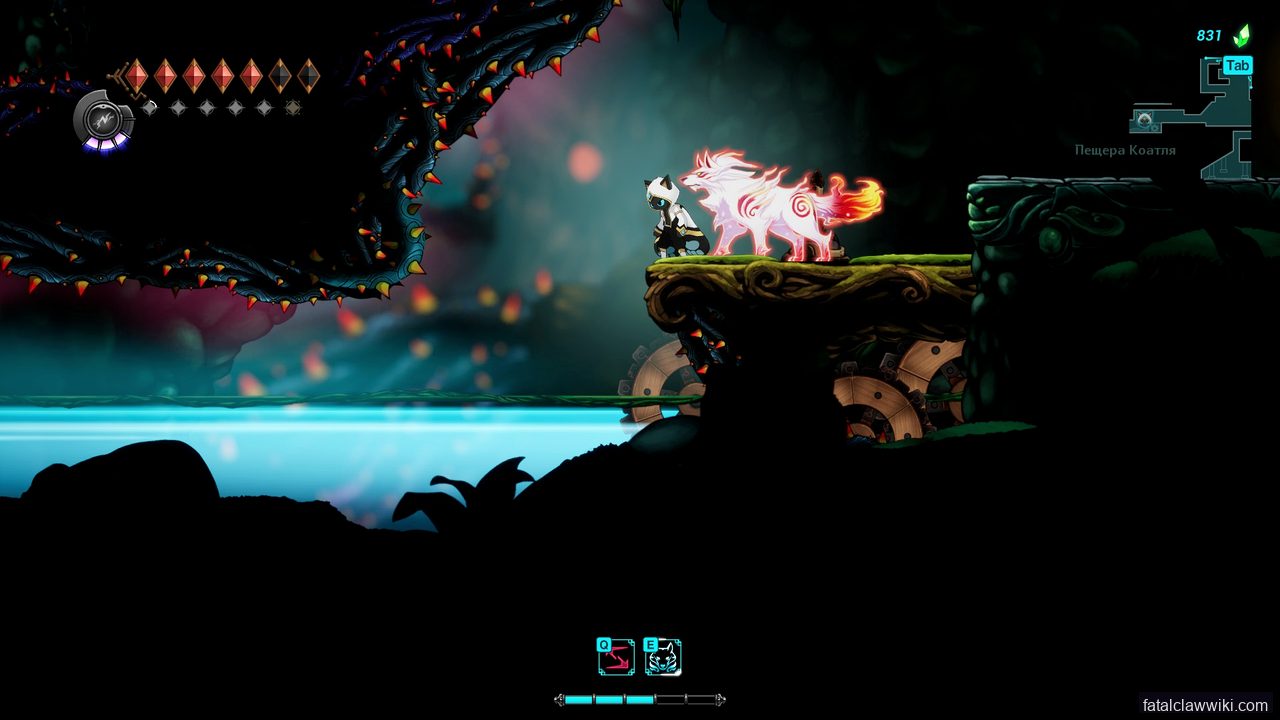
Blink is one of Fatal Claw’s four core combat verbs. The source pack describes it as a teleport behind enemies with a Nightcrawler-style feel, powered by photo energy, and also useful as a movement and puzzle tool. That makes Blink both simple and easy to misuse. It is not just a dodge. It is a decision about timing, side switching, route geometry, and what Kisha can safely do after landing.
Most Blink mistakes happen before the button is pressed. If you do not know where the attack is going, Blink may move you into the next lane. If you Blink from too far away, you may miss the punish. If you Blink too close, a boss can catch the landing. The correct habit is to read commitment first, use Blink second, and attack or move only after the landing is stable.
Blink Use Cases
| Use case | What to watch | Best response |
|---|---|---|
| Behind-enemy punish | Enemy commits to a forward-facing attack | Blink through the committed side, use a short Claw string, then reset. |
| Boss lane escape | A pattern claims the current lane | Blink only after the lane is fixed; do not teleport into an undecided pattern. |
| Puzzle repositioning | A route asks for sudden side or gap movement | Check landing space first, then Blink with a route goal instead of a panic input. |
| Recovery setup | Kisha needs distance before healing | Use Blink to create space only if the landing is safer than the starting spot. |
| Backtracking tool | Old rooms become reachable after new movement options | Combine Blink with Carox markers and other tools such as wall climb or Silver Chain. |
Boss Tactics
Saitin teaches the basic pattern: let the boss commit, Blink behind, punish briefly, and leave. Ortrinde adds floating blades, so you must confirm that the landing is not crossing a blade path. Irbes adds phase-two copies; Blink should cross a clump after the bodies choose a lane. Kurtz specifically tests Blink distance. Walk or reposition first if the angle is wrong. Enma punishes early Blink because illusions can bait movement before the real threat appears.
The common thread is commitment. Blink is strongest after an enemy has chosen an attack line. Using it before that point is a guess. Sometimes the guess works, but it does not become a stable strategy.
Puzzle And Route Use
Blink is also a movement and puzzle tool. In Metroidvania routing, that means it can turn old rooms into new paths. A gap that looked impossible, a switch position that required a different side, or a route that asked for sudden repositioning may become available once Blink is part of your kit. Pair this with Carox. If Carox marked a room earlier, revisit it after Blink and other movement tools such as Dash, air dash, wall climb, glide, Lyani’s Claws, or Silver Chain.
Do not assume Blink solves every route gate. Water routes may need Meditation of Jibanam. Late traversal may need Silver Chain from Aphotic Marsh. Some doors may depend on levers or story state. Blink is powerful, but Fatal Claw’s map is built from multiple systems.
Healing And Photo Energy Habits
The source pack mentions photo energy in connection with Blink, but it does not provide exact energy values. The safe advice is to avoid spending Blink without a purpose. If Blink is limited by a resource, wasted teleports reduce both offense and safety. Even if your current build gives comfortable access, treating Blink as free encourages bad timing.
Healing works separately through blue orbs refilled by attacking or tea. Blink can create a healing window, but only if it leaves you outside the active threat. Do not Blink away and immediately heal just because distance exists. Check whether the boss or route hazard can still reach you.
Related Pages
- Kurtz Boss Guide - distance control and Blink timing under pressure.
- Ortrinde Boss Guide - floating blades and safe teleport lanes.
- Cabitz Guide - setup choices that support movement and recovery.
- Fatal Claw How To Play - Blink as one of the four combat verbs.